
Blog
Luxury Kitchen Backsplash Tiles: Extraordinary Design

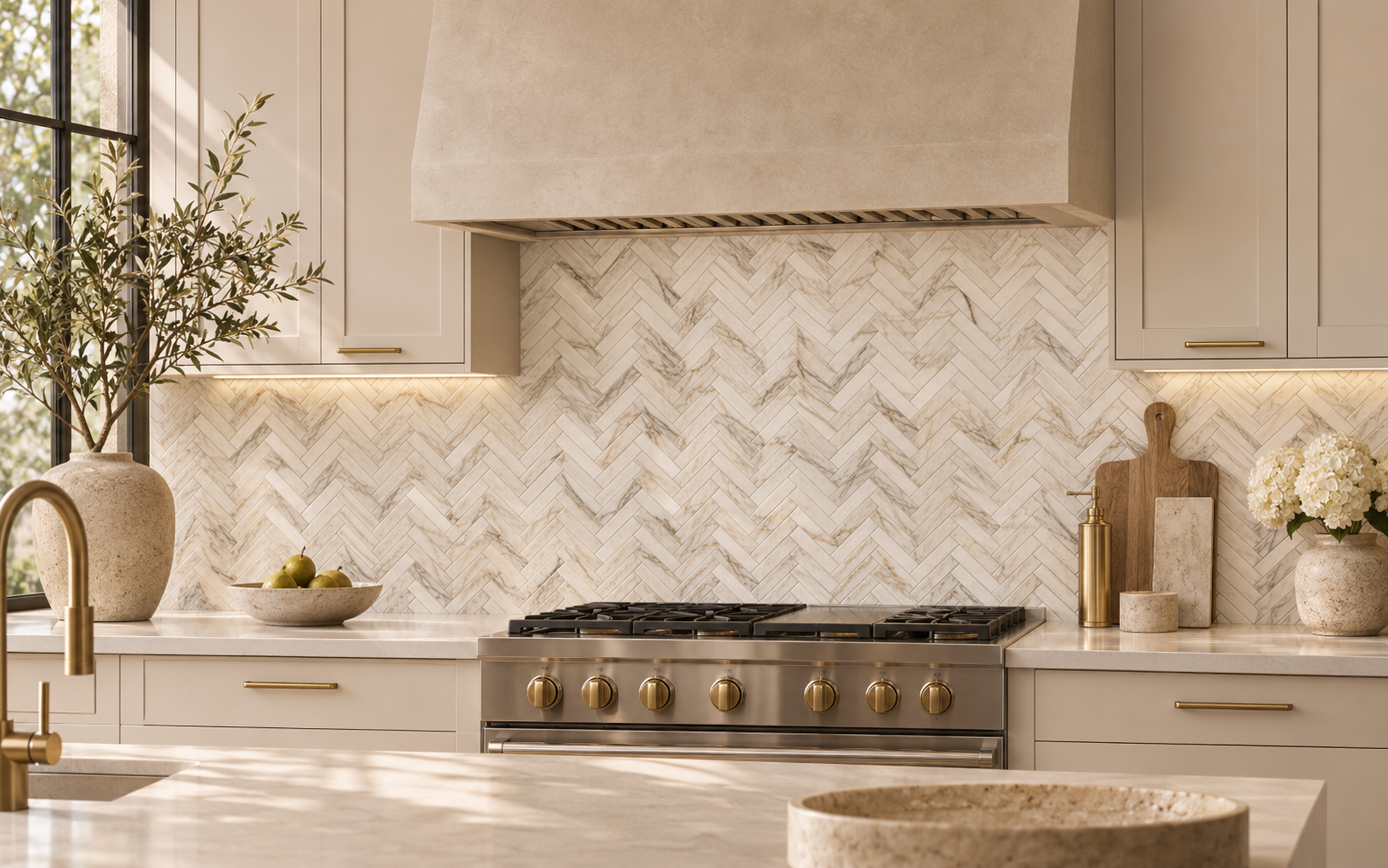
Luxury kitchen backsplash tiles are decorative, easy-to-clean wall coverings that protect kitchen walls from everyday splashes while shaping the room’s overall style. From natural marble and large-format porcelain to textured ceramic and intricate mosaics, the right backsplash balances aesthetics, upkeep, lighting, and installation requirements. This 2026 Tile Mode guide explains contemporary backsplash trends, material differences, herringbone versus chevron patterns, and practical selection tips for a refined kitchen.
The 2026 Luxury Backsplash Trend Forecast: Freshness and Formats
Contemporary trends for luxury kitchen backsplash tiles in 2026 emphasize architectural scale, tactile surfaces, warm neutrals, and expressive color accents. Full-height stone or porcelain backsplashes can create a continuous visual field with fewer joints, while smaller artisanal tiles introduce variation and texture. A slab backsplash is not literally grout-free: perimeter joints, transitions, and movement accommodation still matter.
The Additionally, the report emphasizes the growing preference for sustainable materials and energy-efficient appliances, reflecting a broader commitment to environmental responsibility among consumers. The incorporation of multifunctional spaces chen & Bath Association’s 2026 Kitchen Trends Report identifies neutrals as the leading color family, with greens and blues also prominent. It also reports interest in slab or solid-surface backsplashes and using backsplashes for statement color. These findings describe professional expectations rather than guarantees of what every homeowner will choose.
2026 Style Pillars
- Architectural Scale: Full-height slabs and large-format porcelain tiles create a calm, expansive backdrop with fewer visible joints.
- Artisanal Texture: Handmade-look ceramics, zellige-inspired finishes, and subtle glaze variation add depth without requiring a bold pattern.
- Grounded Color: Cream, taupe, warm white, green, and muted blue can pair naturally with wood cabinetry and stone countertops.
- Tonal Transitions: Layering similar shades creates quiet variation; carefully planned ombré installations can become a focal point.
- Structural Dimension: Fluted, ribbed, and other 3D textured kitchen wall tiles create changing highlights and shadows.
At Tile Mode, explore backsplash styles by color, shape, format, and material. Confirm individual product specifications, suitability, and availability before ordering.
Luxury Kitchen Backsplash Tiles: Choosing the Right Material
Luxury kitchen backsplash tiles differ in appearance, cleaning requirements, heat exposure limits, and installation needs. When selecting a backsplash material, consider both its visual appeal and everyday performance. Select a product specifically approved for its location, particularly behind a cooktop or range, and follow the appliance’s required clearances and the tile manufacturer’s instructions.
Performance Criteria for Luxury Surfaces
- Heat and Appliance Clearance: Check manufacturer guidance and applicable clearances around gas burners, ranges, and other high-heat zones.
- Moisture Management: A properly installed backsplash helps protect the wall from cooking splashes; the tile and grout assembly must be detailed correctly at edges, outlets, and countertops.
- Cleaning and Stain Resistance: Consider oils, acidic ingredients, grout joints, surface texture, and the recommended cleaner.
| Material | Maintenance considerations | Best for |
| Calacatta or Carrara marble | May benefit from a suitable impregnating sealer; vulnerable to acid etching | Distinct natural veining and statement focal points |
| Porcelain tile or slab | Typically easy to clean; check grout, finish and manufacturer guidance | Large-format stone looks and lower routine upkeep |
| Limestone or travertine | More porous stone; product-specific care and sealing guidance | Warm organic texture and natural variation |
| Glazed ceramic or mosaic | Typically easy tile cleaning; more grout joints in intricate patterns | Handcrafted character, color and decorative layouts |
Natural Stone: The Timeless Allure of Marble and Travertine
Natural stone remains a timeless choice for luxury kitchen backsplash tiles, offering one-of-a-kind veining, color variation, and movement. A Calacatta marble backsplash often features pronounced veins, while Carrara commonly shows finer, softer veining, although individual slabs vary. Limestone and travertine offer earthier, quieter palettes. Review actual material samples and available slabs before selecting a pattern or deciding where seams will fall.
Stone care depends on the specific material and finish. A penetrating sealer may reduce absorption and staining, but it does not make marble acid-proof or prevent etching. Ask the supplier or fabricator about sealing and maintenance appropriate to the selected stone.
Advanced Porcelain: Where Innovation Meets Timeless Design
Porcelain is a practical and versatile material for luxury kitchen backsplash tiles, reproducing marble, limestone, travertine, or concrete aesthetics with a dense, low-water-absorption surface. Large-format porcelain panels reduce the number of grout lines and can align visually with the countertop. However, they still require appropriate substrate preparation, cutting, joints, and professional installation, especially around outlets and appliance areas.
Not every porcelain product has identical thickness, finish, print variation, or heat-use approval. Check the actual product technical sheet rather than assuming all porcelain slabs perform the same way.
Contemporary Patterns: Herringbone vs. Chevron and Beyond
The geometry of luxury kitchen backsplash tiles can change the kitchen’s perceived scale and movement. Popular patterns such as herringbone, chevron, and stacked bond introduce distinctive visual character. For luxury kitchens, the best layout connects the backsplash to cabinetry proportions, nearby countertop veining, and the room’s overall design language.
1. Herringbone vs. Chevron Patterns
Herringbone uses rectangular pieces set at right angles to form a staggered zigzag. Chevron uses pieces with angled ends meeting in continuous V-shaped points. Herringbone does not inherently require mitered tile ends; chevron often uses factory-shaped pieces or angled cuts. Both layouts may require more material than straightforward stacked or running-bond designs, but exact waste depends on tile dimensions, wall geometry, layout, and installer cuts.
2. Modern Minimalist Stacked Bond
Stacked-bond tiles align in straight vertical or horizontal rows for a clean, geometric backdrop. Vertical stacking can accentuate height, while horizontal stacking can emphasize width. Consistent grout joints make this approach especially effective for minimal kitchens.
3. Dimensional Textures: Fluted, Ribbed, and Relief Tiles
Fluted and dimensional textured kitchen wall tiles create light-and-shadow effects that change during the day. In a backsplash, deeper relief can collect cooking residue, so consider ease of cleaning, particularly behind a range. Use product-specific guidance for textured or crackle-glazed finishes, which may need special care.
Contemporary Innovation: Integrating Technology and Lighting
Under-cabinet lighting can enhance the appearance of luxury kitchen backsplash tiles by revealing the surface details of fluted, handmade-look, or stone-look tiles. Diffused LED strips generally create more even illumination than exposed point lights. Select electrical components rated for the kitchen environment, plan wiring and outlets before tile installation, and follow local electrical requirements.
- Strategic Illumination: Use diffused light to reveal texture without creating harsh glare on glossy surfaces.
- Seamless Power: Coordinate outlet placement, plug strips, and code-compliant electrical devices with a qualified professional before installing the backsplash.
The Selection Process: Bringing Your Vision to Reality
- Define Your Aesthetic Anchor: Choose a bold veined stone, quiet porcelain surface, earthy ceramic, or decorative mosaic.
- Coordinate for Visual Harmony: Compare undertones with cabinetry, countertops, flooring, and hardware in the room’s actual lighting.
- Order and Review Samples: Examine color, finish, texture, grout options, and surface cleanability before committing.
- Verify Technical Details: Confirm the product’s wall-use and heat-area suitability, size, lead time, trim options, and installation requirements.
- Plan Quantities with Your Installer: Measure net coverage, openings, pattern direction, cuts, and extra material required for the chosen layout.
Explore Tile Mode’s collection of luxury kitchen backsplash tiles to discover different materials, colors, patterns, and finishes. Whether you prefer marble-look porcelain, decorative mosaics, or textured ceramic tiles, compare samples to find the right combination of functionality and timeless design.
Frequently Asked Questions
What is a good tile for a kitchen backsplash?
Porcelain and glazed ceramic are excellent options for luxury kitchen backsplash tiles because they offer a broad range of colors, patterns, and relatively simple routine cleaning. Marble and other natural stones suit homeowners who prefer authentic veining and accept more material-specific care. Always verify the tile’s suitability for the intended wall and appliance area.
What color backsplash is most popular in 2026?
Warm neutrals remain a prominent choice for 2026 kitchens, while greens and blues provide popular accent directions. The NKBA 2026 Kitchen Trends Report identifies neutral palettes as the leading overall category and backsplashes as a common area for statement color. Choose a color that complements your existing materials rather than relying on trends alone.
How do I choose the right textured backsplash?
Compare the texture with your cabinet style, lighting, and cleaning needs. Subtle fluted or handmade-look finishes add movement while keeping the color palette understated. In splash-prone or greasy cooking zones, check whether the relief and glaze can be cleaned easily.
Should the backsplash be light or dark?
Both light and dark luxury kitchen backsplash tiles can elevate a kitchen’s design. Light backsplash tiles can brighten a kitchen and soften dark cabinetry, while darker tiles may frame light wood or white cabinets. Test samples in daylight and under-cabinet lighting to see how reflectivity and undertones affect the result.
How do I coordinate a decorative backsplash with marble countertops?
Use one of the countertop’s background or secondary vein colors as a starting point. A quieter backsplash can support strongly veined marble, while a bolder mosaic works best when the countertop has limited visual movement. Review the two materials side by side.
What are the pros and cons of large-format tiles versus mosaics?
Both large-format porcelain and mosaics are popular options for luxury kitchen backsplash tiles. Large-format porcelain tiles or slabs create fewer visible grout joints and a more continuous appearance but require careful handling, layout, cutting, and installation. Mosaics offer intricate patterns and flexibility around small details, though they introduce more grout joints to clean.
How does herringbone compare to chevron for a backsplash?
Herringbone sets rectangular pieces perpendicular to each other in a broken zigzag. Chevron uses angled-end pieces to create a continuous V-shaped pattern. Both create movement; chevron feels more directional, while herringbone offers a classic woven effect.
What is the expected waste percentage for complex tile patterns?
There is no single guaranteed waste rate. A straight layout may require less overage than herringbone, chevron, or intricate mosaics, but the actual allowance depends on tile dimensions, wall shape, outlets, edge cuts, and breakage. Have your installer calculate quantities for the exact layout.
Does a natural marble backsplash need to be sealed?
Many natural marble surfaces benefit from an appropriate penetrating sealer, but the need and timing depend on the stone, finish, and manufacturer or fabricator guidance. Sealers help limit absorption; they do not prevent acid etching or make marble stain-proof.
Are eco-friendly luxury tiles as durable as traditional porcelain?
Sustainability claims and durability must be evaluated separately. Recycled content or responsible sourcing does not automatically establish performance. Compare verified environmental documentation alongside the technical specifications, intended-use approval, and maintenance requirements for each tile.