
Blog
The Best Outdoor Porcelain Pavers for Luxury Pool Decks

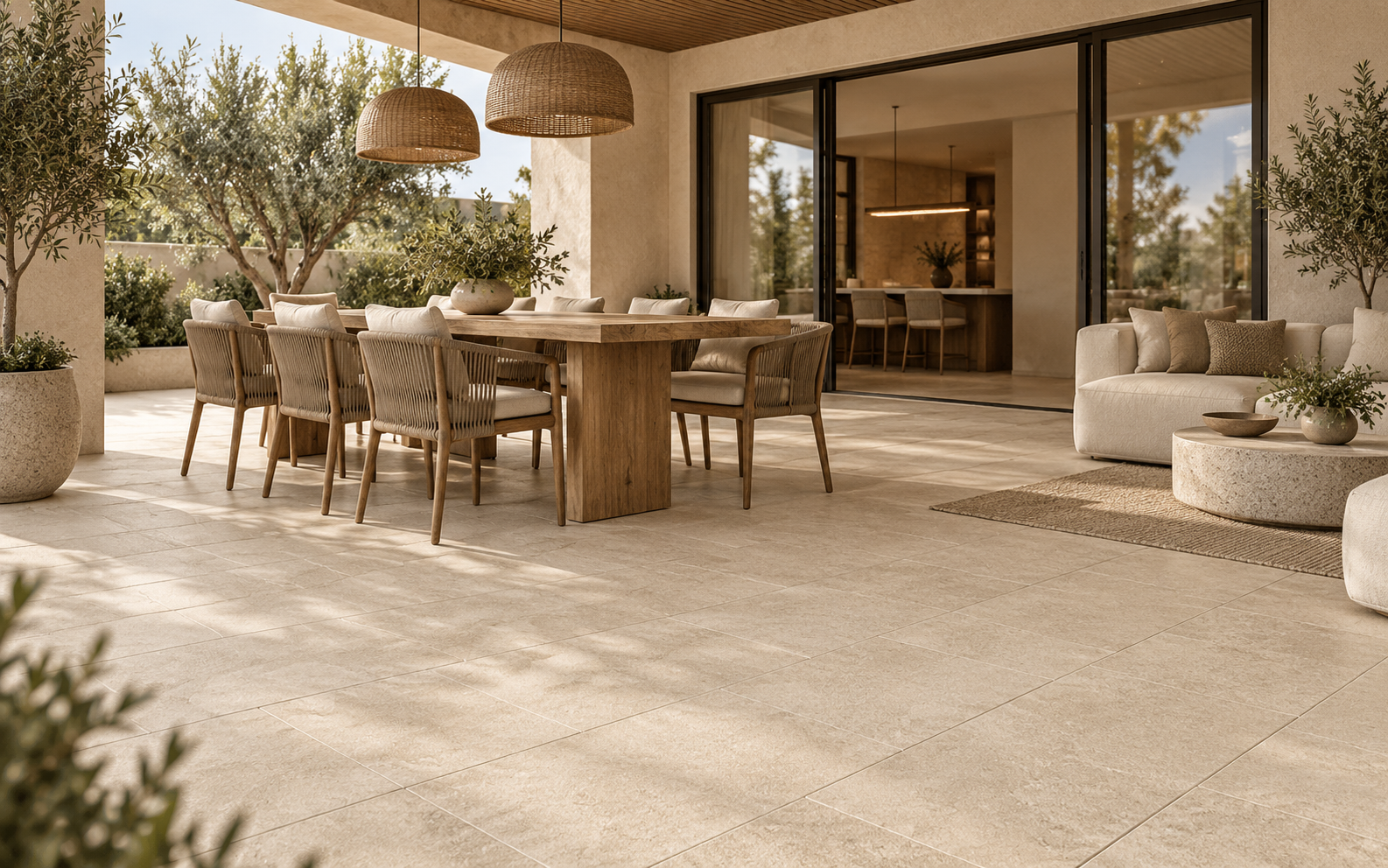
Outdoor porcelain pavers are dense, low-absorption ceramic surfaces designed for eligible exterior applications. For a luxury pool deck, the best choice combines verified wet-area suitability, an installation system appropriate for the site, and a style that complements the architecture. This 2026 Tile Mode guide explains porcelain pavers vs. travertine, explores ten design directions, and answers common questions about poolside traction, heat, maintenance, and installation.
Why Porcelain Pavers Are a Strong Choice for 2026 Pool Decks
Porcelain pavers are popular for pool decks because properly specified products offer low water absorption, design versatility, and comparatively straightforward routine care. Porcelain tile is classified by a water absorption rate of 0.5% or less under applicable product standards, but the performance of a finished pool deck also depends on the specific paver, surface finish, drainage, installation method, and exposure to pool chemicals.
In the porcelain pavers vs. travertine comparison, porcelain can reduce the need for routine surface sealing, while travertine provides the distinctive variation of natural stone and may require maintenance suited to its porosity and finish. Neither material is universally better for every installation. Verify chemical resistance, frost resistance where relevant, and the product manufacturer’s intended-use documentation.
Heat is another important consideration. Light-colored surfaces often absorb less solar energy than darker alternatives, but no porcelain finish can be guaranteed to remain cool in direct sun. Request a sample and evaluate it in your site’s sunlight conditions.
| Feature | Outdoor Porcelain Pavers | Natural Travertine |
| Water absorption | Porcelain body: 0.5% or less; verify paver data | Varies with stone, cut, and finish |
| Pool-chemical exposure | Verify manufacturer’s chemical-resistance data | Stone-specific; appropriate care may be required |
| Routine sealing | Porcelain body generally does not need sealing; joints may have separate requirements | Sealing recommendations vary |
| Color and appearance | Manufactured colors and patterns; batch variation possible | Natural variation between pieces |
| Slip resistance | Select a finish classified for exterior wet use | Depends on texture and finish |
| Installation | Follow product-specific support and setting requirements | Follow stone and system requirements |
Top 8 Luxury Porcelain Paver Styles for 2026
These ten design directions illustrate ways to create a cohesive luxury pool deck. Sizes, finishes, and available patterns vary by collection; confirm current Tile Mode inventory and individual product specifications before choosing a paver.
1. Large-Format Porcelain Pavers: Minimalist Sophistication
Large-format porcelain pavers, including formats such as 24 × 48 inches where available, can create broad visual continuity across modern decks. Plan movement joints, substrate tolerances, drainage, and lifting requirements for the chosen format.
2. Wood-Look Porcelain: The Warmth of Natural Timber
Wood-look porcelain evokes teak, oak, and weathered planks while avoiding the maintenance associated with exposed wood. For pool surrounds, specify an exterior-wet-rated texture rather than assuming a wood-look finish provides sufficient traction.
3. Carrara Marble-Look: Timeless Elegance
Marble-look porcelain adds soft veining and a refined palette to poolside settings. Select a textured, exterior-rated product and verify its wet-use classification; polished interior marble-look tile should not be treated as interchangeable with pool-deck pavers.
4. Concrete-Look: Contemporary Simplicity
Concrete-look porcelain pairs well with modern architecture and restrained landscaping. It offers the appearance of concrete in a manufactured modular paver; structural movement and proper installation still matter.
5. Travertine-Look: Natural Stone Character
Travertine-look porcelain recreates warm cream, ivory, and sand-colored stone aesthetics. Review samples from multiple boxes, because shade and pattern variation are part of many designed collections.
6. 24 × 24 Pavers: Architectural Grid
Square 24 × 24-inch formats can create orderly grids for courtyards and pool decks. Charcoal and anthracite tones add contrast, but test darker colors for solar heat gain in exposed locations.
7. Sand-Tone Coastal Textures
Cream, beige, and sandy porcelain tones work well in coastal and Mediterranean-inspired outdoor spaces. Light colors may help reduce heat buildup compared with dark colors under similar conditions, although surface temperature varies.
8. Terrazzo-Look Porcelain: Modern Pattern
Terrazzo-inspired designs provide subtle or expressive aggregate-like patterns without requiring traditional poured terrazzo. Choose an outdoor-rated finish and confirm that its texture remains practical to clean.
Technical Precision: Slip Resistance and Safety Standards
For pool decks, a paver’s suitability for exterior wet use matters more than an isolated slip-resistance number. ANSI A326.3 describes product-use classifications such as Exterior, Wet (EW), and evaluates dynamic coefficient of friction (DCOF) alongside other considerations. The standard does not set one universal DCOF pass/fail value for every exterior pool deck. Surface structure, drainage, contaminants, use conditions, and maintenance all affect traction.
An R11 result under a ramp-test method can be useful when supplied by a manufacturer, but it is not identical to an ANSI A326.3 classification and does not guarantee a slip-free surface. Always consult the paver’s technical sheet and the project specifier for the exact poolside application.
| Technical criterion | What to verify before specifying |
| Porcelain identification | Water absorption of 0.5% or less under relevant standard |
| Wet-use suitability | Manufacturer classification or documentation for exterior wet pool-deck use |
| Slip testing | Reported test method and product result; avoid treating R11 and DCOF as equivalent |
| Breaking / flexural strength | Individual product test data and approved load / support conditions |
| Freeze-thaw resistance | Product-specific results when climate exposure warrants |
| Edges, joints and movement | Installation-system instructions and applicable movement-joint requirements |
Planning a Luxury Porcelain Pool Deck: What Affects the Project
A luxury pool deck should be planned as a complete outdoor assembly, not chosen by paver appearance alone. Paver thickness and size, the substrate, excavation or slab preparation, drainage, perimeter details, coping, access, and labor all affect the scope.
| Planning element | Questions to ask |
| Paver selection | Is this exact finish approved for exterior wet applications? |
| Pool coping | Are matching coping pieces or compatible edges available? |
| Drainage | How will water move away from the pool and adjacent structures? |
| Support system | Is the specified paver approved for the chosen support method? |
| Movement joints | Where are the required perimeter and field joints? |
| Maintenance | Which cleaners, joints and sealers, if any, are recommended? |
Professional Installation Methods for Pool Decks
Three common methods are pedestal-supported, bonded mortar-set, and aggregate-base or sand-set systems. The correct approach depends on the specific paver, site conditions, local requirements, and the manufacturer’s instructions. There is no universal slope or joint width that applies to every system.
Pedestal Systems for Accessible Drainage
Adjustable supports can create a raised walking surface over a drained structure. Confirm the paver’s approval for pedestal installation, required support locations, wind and uplift conditions, and any supplemental safety measures.
Bonded or Mortar-Set Systems
Bonded installations can work over appropriately prepared substrates with approved exterior setting materials, movement joints, and drainage detailing. Pool edges, stairs, and waterproofed areas require coordinated specifications.
Sand-Set or Aggregate-Base Systems
Some porcelain pavers are approved for installation over prepared aggregate or sand bases with edge restraints. Confirm required paver thickness, base depth, compaction, drainage and loading limitations; do not assume every 2 cm product can use every method.
Explore Poolside Tile and Pavers at Tile Mode
Tile Mode helps homeowners, designers, and contractors explore porcelain styles for outdoor living. Browse Tile Mode’s pool tile offerings and request product-specific technical information before specifying porcelain pavers for a pool deck. For current showroom or pickup details, refer to Tile Mode’s contact information at tilemode.com.
Frequently Asked Questions
What are the best pavers for a luxury pool deck in 2026?
The best luxury pool deck pavers combine a verified exterior-wet-use classification, a compatible installation system, and a design appropriate for the project. Large-format, travertine-look, concrete-look, and sand-tone porcelain pavers are popular design directions, but product-specific performance data should determine the final choice.
Are porcelain pavers good for pool decks?
Yes. Properly specified porcelain pavers can be an excellent pool-deck option because their dense bodies have low water absorption and are available in outdoor textures. Confirm wet-use suitability, drainage details, and compatibility with the pool environment.
Is porcelain better than travertine for saltwater pools?
Porcelain typically has lower water absorption than travertine and usually does not require sealing of the tile body. However, resistance to saltwater and pool chemicals depends on the specific material, finish, joints, and installation; review manufacturer guidance for either option.
Can porcelain pavers get hot in direct sunlight?
Yes. Porcelain pavers can become hot in direct sunlight. Lighter colors may reduce heat gain relative to darker finishes under comparable conditions, but temperature depends on sun exposure, color, texture, climate, and installation.
What are the downsides of porcelain pavers?
Porcelain pavers require careful specification, suitable cutting equipment, correct substrate preparation, and installation compatible with their thickness and format. Some finishes become hot or slippery under certain conditions, so samples and technical documentation are essential.
Where should I use 2 cm versus 3 cm porcelain pavers?
Thickness alone does not determine suitability. Many 2 cm products are intended for pedestrian terraces and pool surrounds when installed as approved; heavier loads or vehicular use require a paver and assembly explicitly rated by the manufacturer and designer for those conditions.
Can I mix porcelain pavers with natural stone coping?
Yes, provided the chosen materials and connection details are compatible. Account for differences in thickness, expansion, drainage, slip resistance, pool chemicals, and cleaning requirements.
How do I maintain porcelain pool decking?
Remove loose debris regularly, rinse as needed, and clean with a manufacturer-approved product. Address standing water and organic buildup, and follow the separate care instructions for grout, joints, coping, and drainage. Avoid aggressive pressure washing unless the system manufacturer permits it.
Which brand of porcelain tile is best for pool decks?
No single brand is best for every project. Compare the exact product’s exterior-wet suitability, water absorption, strength, surface finish, compatible installation methods, documented testing, warranty, and current availability. Tile Mode can help narrow the look and specification needs.